Overview
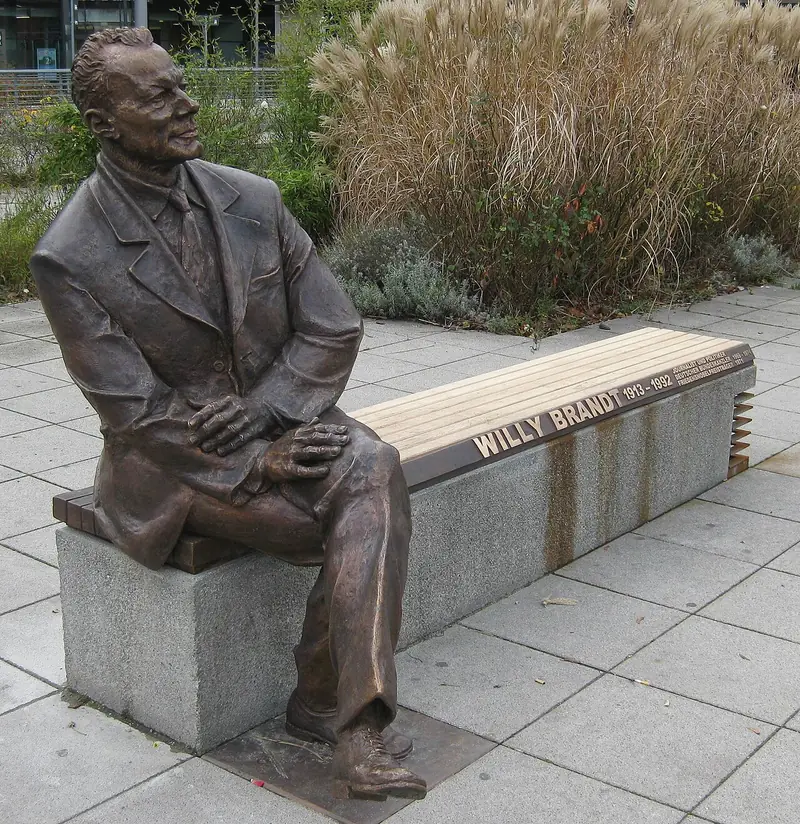
The Willy Brandt Memorial, located in the heart of Nuremberg, Germany, stands as a poignant tribute to one of the most influential figures in post-war German history. Positioned at Willy-Brandt-Platz, the monument commemorates the legacy of Willy Brandt, the former Chancellor of West Germany, who played a pivotal role in fostering reconciliation and dialogue during a tense period of the Cold War. As visitors approach, they are greeted by a striking representation of Brandt’s enduring ideals of peace and diplomacy. This monument not only honors a significant political figure but also serves as a reminder of the importance of unity and understanding in a world often marred by division.
Nuremberg, with its rich history and cultural heritage, provides a fitting backdrop for such a powerful symbol. The city itself is renowned for its medieval architecture and historical significance, having been a central stage for many pivotal events in German history. The Willy Brandt Memorial is thus not merely a standalone monument but part of a broader narrative that encompasses the trials and triumphs of a nation.
Visiting the memorial offers a unique opportunity to reflect on the values that Willy Brandt championed, making it a must-see for those interested in modern European history. Whether you are a history buff, a political enthusiast, or simply a curious traveler, the memorial invites contemplation and dialogue about the past and its relevance to contemporary society.
History and Significance
Willy Brandt’s life and career are marked by significant milestones that shaped the course of German politics. Born in 1913, Brandt rose to prominence as a leader in the Social Democratic Party (SPD) and served as the Mayor of West Berlin before becoming Chancellor from 1969 to 1974. His tenure was characterized by groundbreaking policies aimed at improving relations with East Germany and the Soviet Union, notably through his Ostpolitik, which sought to ease tensions between East and West during the Cold War.
The memorial itself stands as a symbol of Brandt’s enduring legacy, reflecting his commitment to peace, democracy, and social justice. It serves as a reminder of his efforts to bridge divides and promote understanding in a fractured Europe. The decision to erect this monument underscores the recognition of Brandt’s contributions not only to German society but also to global diplomacy.
The location of the memorial in Nuremberg adds an additional layer of significance, as the city is often associated with both the historical rise of the Nazi regime and the subsequent Nuremberg Trials that sought justice for those responsible for atrocities during World War II. By placing Brandt’s memorial in this historically charged city, it emphasizes the importance of learning from the past and striving for a future rooted in cooperation and mutual respect.
As visitors explore the memorial, they may reflect on the broader implications of Brandt’s work and the lessons it holds for contemporary society, especially in times of political strife and social division.
Architecture and Features
The Willy Brandt Memorial is not only a tribute to the man but also an artistic representation of his ideals. The design of the monument reflects a modern aesthetic, characterized by clean lines and an open layout that invites interaction and contemplation. While specific architectural details may not be available, the monument itself is designed to engage visitors both physically and emotionally.
Key features of the memorial include a prominent statue of Willy Brandt, which captures his likeness and demeanor, symbolizing his approachable nature and commitment to the people. Surrounding the statue are elements that encourage visitors to pause and reflect on Brandt’s contributions, fostering a sense of connection to his legacy.
The memorial is thoughtfully situated within Willy-Brandt-Platz, allowing for easy access and visibility, drawing attention from both locals and tourists. The surrounding area is designed to be welcoming, often featuring paths for walking and spaces for gathering, which enhances the experience of those visiting the site.
Overall, while the memorial’s physical attributes may not be extensively detailed, its design speaks to the values that Willy Brandt espoused—a commitment to openness, dialogue, and peace.
Visiting Information
Visiting the Willy Brandt Memorial is a straightforward experience, as it is located in a central area of Nuremberg. The memorial is accessible via various modes of transportation, including public transit. Visitors can check the official website for current information regarding hours and any potential admission fees, although many outdoor monuments like this are typically free to enter.
While the memorial can be explored in a short visit, it is advisable to set aside sufficient time to fully appreciate the significance of the site. A visit might take anywhere from 30 minutes to an hour, depending on how much time one wishes to spend reflecting and taking in the surrounding atmosphere.
The best times to visit are often during the milder months when the weather allows for comfortable outdoor exploration. Early mornings or late afternoons can provide a quieter experience, avoiding peak tourist times while allowing for more personal reflection at the site.
Visitors should consider bringing a camera, as the memorial and its surroundings offer several picturesque spots for photography. Comfortable walking shoes are recommended, as the area around the memorial may invite further exploration of the nearby attractions and historical sites.
Nearby Attractions
The Willy Brandt Memorial is located in a vibrant area of Nuremberg that is rich with historical and cultural attractions. Here are a few nearby sites worth exploring:
Nuremberg Castle: A short walk from the memorial, this historic castle offers panoramic views of the city and insights into Nuremberg’s medieval past. Exploring the castle grounds and its museum can enhance your understanding of the city’s history.
Documentation Center Nazi Party Rally Grounds: This museum provides a comprehensive overview of the history of the Nazi Party and its rallies held in Nuremberg. It serves as an educational resource about the darker chapters of German history.
St. Lorenz Church: Known for its stunning Gothic architecture, this church is one of the most important religious buildings in Nuremberg. Visitors can admire its intricate facade and beautiful stained glass windows.
Market Square (Hauptmarkt): A bustling area filled with shops and stalls, this square is perfect for those looking to experience local culture, cuisine, and crafts. The famous Nuremberg Christkindlesmarkt (Christmas market) takes place here annually.
Nuremberg Toy Museum: For a lighter experience, this museum showcases the rich tradition of toy-making in Nuremberg, making it a fun stop for families and children.
Insider Tips
To make the most of your visit to the Willy Brandt Memorial, consider these insider tips:
Photography: The memorial provides excellent opportunities for photography, especially in the soft light of early morning or late afternoon. Be respectful of other visitors and their experience while capturing your memories.
Crowd Avoidance: To enjoy a quieter visit, aim to arrive during weekday mornings. Weekends, particularly during tourist season, can see larger crowds.
Engage with the History: Take some time to read about Willy Brandt’s life and contributions before your visit. This context can enhance your appreciation of the memorial and its significance.
Practical Information
When planning your visit to the Willy Brandt Memorial, consider the following practical tips:
What to Bring: Comfortable walking shoes, a camera, and perhaps a notebook for jotting down thoughts. Water is also advisable, especially during warmer months.
Seasonal Considerations: The best times to visit are typically in spring and fall when the weather is mild. Summer can be hot, while winter may bring cold temperatures, so dress accordingly.
Accessibility: The memorial is designed to be accessible to all visitors, ensuring that everyone can engage with this important monument.
Frequently Asked Questions
How long should I spend visiting?
A visit typically takes between 30 minutes to an hour, depending on your level of interest and engagement with the memorial.
Is photography allowed?
Yes, photography is generally allowed at the memorial. However, it’s courteous to be mindful of other visitors.
Are there guided tours?
While guided tours may not be specifically available for the memorial, the surrounding area offers various guided experiences that include the monument as part of the itinerary.
What’s the best time to visit?
Early mornings or late afternoons during weekdays are ideal for a more serene experience, while spring and fall are often the best seasons for pleasant weather.
Is it wheelchair accessible?
Yes, the memorial is designed to be accessible, ensuring that all visitors can enjoy the site.
Can I buy tickets online?
Check the official website for current information regarding any potential admission fees or ticketing for special events.
Are there restrooms and cafes?
While the memorial itself does not feature restrooms or cafes, these facilities can typically be found in nearby public spaces or attractions.
What should I wear?
Dress comfortably and appropriately for the weather, keeping in mind that you may be walking or standing for extended periods.
The Willy Brandt Memorial offers a meaningful and reflective experience, inviting visitors to engage with the legacy of a leader whose ideals continue to resonate today.



