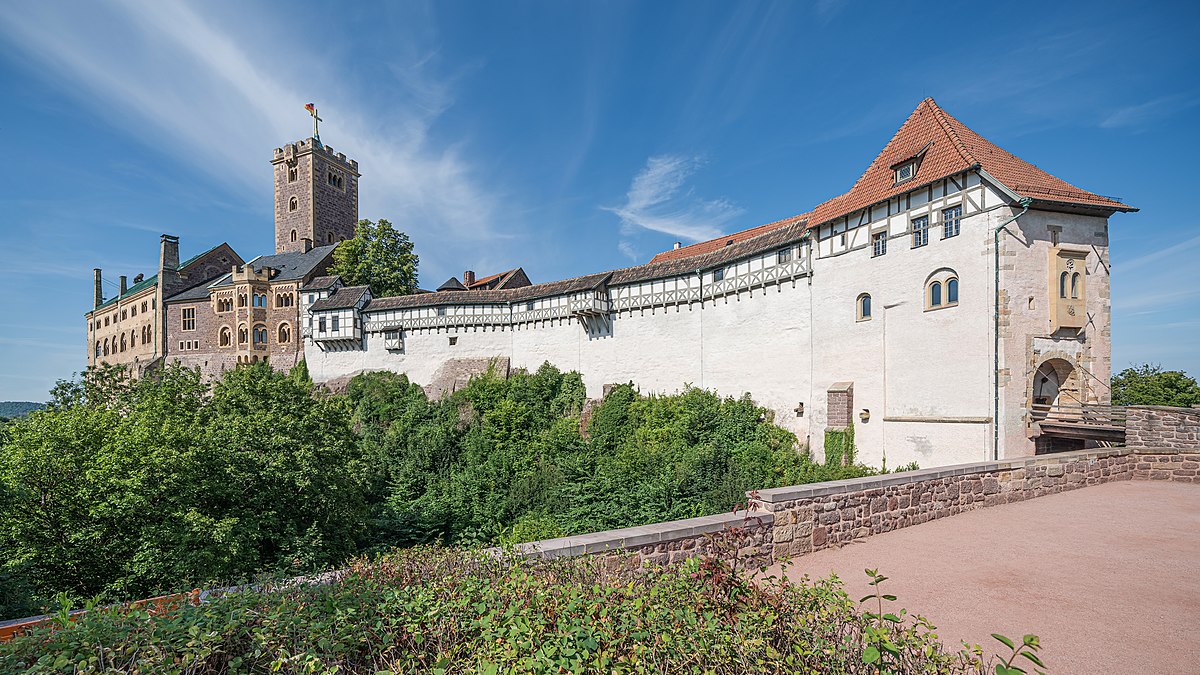
Wartburg
Overview
Wartburg, a remarkable castle located in the picturesque town of Eisenach, Germany, is not only an architectural marvel but also a site of profound historical significance. Perched on a hill, this medieval fortress offers a glimpse into the past, reflecting the cultural and political dynamics of the region. Its strategic position has made it a pivotal site throughout German history, including its association with Martin Luther, who famously translated the New Testament here in the 16th century. Today, Wartburg is recognized as a UNESCO World Heritage Site, drawing visitors eager to explore its storied corridors and scenic surroundings.
The castle’s construction, spanning various eras, showcases a blend of architectural styles that tell the story of its evolution. Surrounded by lush forests and offering panoramic views of the Thuringian landscape, Wartburg is a place where history and nature intersect. While exploring the castle, visitors can expect to engage with its rich legacy, artistry, and the legends that breathe life into its walls.
History and Significance
Wartburg’s history is intertwined with significant events and figures in German culture. The castle was founded in the 11th century and has since played a crucial role in the sociopolitical landscape of the region. One of its most prominent associations is with Martin Luther, who sought refuge here in 1521 after being declared an outlaw by the Holy Roman Empire. It was during this time that he translated the New Testament into German, making the scriptures accessible to a broader audience and significantly influencing the Protestant Reformation. This act not only transformed religious practices but also impacted the German language and literature.
The castle itself has witnessed various transformations, reflecting the changing tastes and needs of its occupants. Throughout the centuries, it has served as a residence for counts, a cultural hub for artists, and a symbol of German national identity. Notably, the Wartburg Festival in 1817, which celebrated the ideals of freedom and unity, further solidified its significance as a national symbol. It became a gathering place for students advocating for liberal reforms, reinforcing its role in the history of German nationalism.
In 1883, Wartburg was designated a national monument, emphasizing its importance in German heritage. The castle continues to be a focal point for cultural events and educational activities, ensuring that its legacy endures for future generations.
Architecture and Features
Wartburg’s architectural design encompasses elements from various periods, creating a fascinating blend of styles. The castle’s layout features a series of interconnected buildings, each with its distinctive character. One of the most notable structures is the Palas, a grand hall that served as the residence for nobility. The hall is adorned with intricate woodwork and murals that reflect the artistic sensibilities of the time.
The castle’s defensive features, including towers and fortified walls, underscore its original purpose as a stronghold. The impressive round tower, known as the “Bergfried,” provides a striking silhouette against the skyline and offers visitors an opportunity to climb for views of the surrounding landscape.
Another significant feature is the Luther Room, where Martin Luther translated the New Testament. This room is preserved to highlight the historical context of his work and offers insights into his life during his stay at Wartburg. The chapel, with its simple yet elegant design, serves as a reminder of the castle’s religious significance.
Visitors can also explore the castle grounds, which are adorned with carefully maintained gardens and pathways that showcase the natural beauty of the surrounding area. The combination of architectural grandeur and scenic vistas makes Wartburg a captivating destination for history enthusiasts and casual visitors alike.
Visiting Information
Reaching Wartburg is relatively straightforward, with various transport options available. Visitors can arrive by car, and parking facilities are typically available near the castle. For those relying on public transport, local buses from Eisenach provide convenient access to the site.
Check the official website for current information regarding visiting hours and ticket prices, as these details can vary throughout the year. When planning your visit, it’s advisable to allocate sufficient time to explore the castle and its grounds thoroughly. A guided tour can enhance the experience, offering deeper insights into the history and significance of the site.
The best times to visit Wartburg are during the spring and autumn months when the weather is mild, and the surrounding forests are particularly beautiful. However, summer months can also attract larger crowds, so early arrivals may provide a more tranquil experience.
Nearby Attractions
While Wartburg is a highlight in its own right, there are several nearby attractions worth exploring:
Eisenach - The charming town at the foot of Wartburg is home to a variety of shops, cafes, and historical sites, including the Bach House, dedicated to the composer Johann Sebastian Bach.
Lutherhaus - This museum is located in the former home of Martin Luther and offers insights into his life and the Reformation.
Thuringian Forest - A short distance from the castle, this expansive forest area provides numerous hiking trails and opportunities for outdoor activities.
Bachhaus Eisenach - Celebrating the life and works of Johann Sebastian Bach, this museum features exhibits and performances that highlight the composer’s legacy.
Automobile World Eisenach - For those interested in automotive history, this museum showcases the rich heritage of automobile manufacturing in the region.
Insider Tips
For photography enthusiasts, Wartburg offers a wealth of picturesque scenes, both inside and out. Early morning or late afternoon light can provide stunning conditions for capturing the castle against the backdrop of the Thuringian landscape. To avoid the crowds, consider visiting during weekdays or outside of peak tourist seasons.
While exploring the castle, take your time to appreciate the intricate details of the architecture and the stunning views from various vantage points. Guided tours can enhance your understanding, so check the schedule for tour availability.
Practical Information
When visiting Wartburg, it’s advisable to wear comfortable footwear, as there are various pathways and stairs to navigate. A light jacket may be useful, particularly in the cooler months, as temperatures can fluctuate.
Seasonal considerations are important when planning your visit. Spring and autumn are ideal for comfortable temperatures and beautiful foliage, while summer may offer more extended daylight hours. Winter can be quite cold, but the castle’s charm in the snow is a unique experience.
Be sure to check the official website for current information regarding what to bring, including any specific regulations or recommendations for visitors.
Frequently Asked Questions
How long should I spend visiting?
A visit to Wartburg typically takes around 2-3 hours, allowing time for exploration and taking in the views.
Is photography allowed?
Yes, photography is generally allowed, but be mindful of any specific restrictions in certain areas.
Are there guided tours?
Guided tours are available and provide a deeper understanding of the castle’s history and architecture.
What’s the best time to visit?
The best times to visit are spring and autumn when the weather is mild and the surrounding scenery is particularly beautiful.
Is it wheelchair accessible?
Check the official website for details on accessibility options within the castle and surrounding areas.
Can I buy tickets online?
Ticket purchasing options may vary, so it’s advisable to check the official website for current information.
Are there restrooms and cafes?
Facilities such as restrooms and cafes are typically available on-site for visitors.
What should I wear?
Wear comfortable shoes and dress according to the season, as the castle involves a fair amount of walking and can be cooler at higher elevations.
Wartburg is a place of great historical significance and architectural beauty, making it a must-visit destination for anyone interested in Germany’s rich cultural heritage.
Location
More in Thuringia
Abgebrochenes Kirchengebäude in Eisenach
📍 Thuringia, Germany
The Abgebrochenes Kirchengebäude in Eisenach, located in the heart of Germany, is a site of intriguing historical significance. As you approach this …

Alte Gerberei
📍 Thuringia, Germany
Alte Gerberei, a museum and technical monument located in Ohrdruf, Thuringia, Germany, offers a fascinating glimpse into the region’s industrial …

Altenburg (Nazza)
📍 Thuringia, Germany
Altenburg Castle, situated in the picturesque region of Nazza, Germany, is a remarkable historical structure that invites exploration and admiration. …

Altenstein Palace
📍 Thuringia, Germany
Altenstein Palace, a striking architectural gem, gracefully ascends a rocky hill on the southwestern slope of the Thuringian Forest in Germany. This …

Altensteiner Park
📍 Thuringia, Germany
Altensteiner Park, situated in the picturesque region of Bad Liebenwerda, Germany, serves as a tranquil retreat for nature enthusiasts and history …

Alter Ringelstein
📍 Thuringia, Germany
Alter Ringelstein, a captivating castle located in the heart of Moorgrund, Germany, presents a remarkable opportunity for history enthusiasts and …
More Castles
Abschnittsbefestigung Andechs
📍 Bavaria, Germany
The Abschnittsbefestigung Andechs, a striking castle located in the scenic region of Andechs, Germany, offers a fascinating glimpse into the …
Abschnittsbefestigung im Taitinger Holz
📍 Bavaria, Germany
The Abschnittsbefestigung im Taitinger Holz represents an intriguing chapter in Germany’s medieval architectural narrative. Located in Bavaria, this …
Abschnittsbefestigung in Burgholz (Türkenfeld)
📍 Bavaria, Germany
The Abschnittsbefestigung in Burgholz, located in the picturesque region of Türkenfeld, Germany, is a fascinating example of medieval military …

Abschnittsbefestigung Puch
📍 Bavaria, Germany
The Abschnittsbefestigung Puch is a remarkable castle located in the Fürstenfeldbruck region of Germany. This historical site offers visitors a …
Abschnittsbefestigung Rederzhausen
📍 Bavaria, Germany
Nestled in the heart of Bavaria, the Abschnittsbefestigung Rederzhausen is a remarkable representation of medieval military architecture. This castle, …

Abschnittsbefestigung Schorn
📍 Bavaria, Germany
The Abschnittsbefestigung Schorn is a striking castle located in Germany, offering visitors a glimpse into the architectural and cultural heritage of …