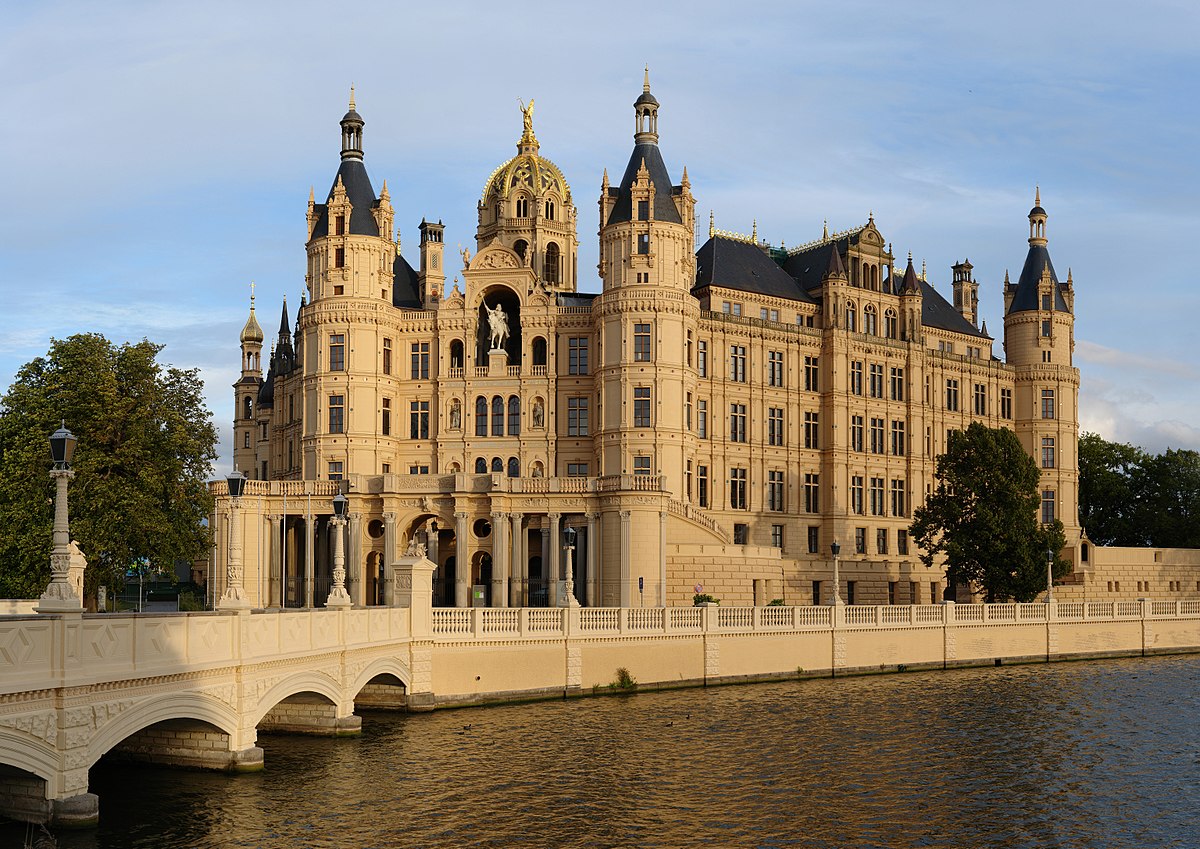
Schwerin Castle
Overview
Schwerin Castle, an architectural landmark located in the heart of Schwerin, Germany, is a striking example of romantic historicism. Surrounded by picturesque lakes and lush greenery, the castle is not only a magnificent structure but also a significant cultural symbol for the region. Its striking towers and ornate facades capture the imagination, drawing visitors from around the world to explore its storied halls and exquisite gardens. As the former residence of the Grand Dukes of Mecklenburg, Schwerin Castle stands as a reflection of the region’s royal heritage and the evolution of German architecture through the ages.
Visitors to Schwerin Castle will find themselves immersed in a world of elegance and grandeur, where every corner tells a tale of the past. The castle’s design and its setting on an island in Lake Schwerin create a harmonious blend of nature and architecture. As you wander through its richly decorated rooms and manicured grounds, you’ll encounter not just a visual feast but also a deeper understanding of the historical significance that the castle holds in the narrative of German nobility.
History and Significance
Schwerin Castle’s history is deeply intertwined with the region’s governance and cultural development. Originally constructed as a fortress in the early medieval period, it underwent significant transformations over the centuries, evolving into a grand residence. The castle became the seat of the dukes of Mecklenburg, who played a crucial role in the political landscape of northern Germany.
The architectural evolution of the castle reflects the shifting tastes and styles of its time. The most significant renovations occurred in the 19th century, when the castle was redesigned in the Romantic style by architect Georg Adolf Demmler. This period marked a departure from its earlier utilitarian roots, and the castle was embellished with elaborate decorations, grand staircases, and intricate interiors.
The castle’s significance extends beyond architecture; it serves as a cultural hub, hosting art exhibitions and events that celebrate the region’s heritage. The castle’s museum showcases valuable collections, including porcelain, silverware, and paintings that illustrate the opulence of the ducal era. Thus, Schwerin Castle is not just a historical monument but a living testament to the vibrant cultural life of the region.
Architecture and Features
Schwerin Castle is characterized by its fairy-tale appearance, with its turrets, spires, and expansive grounds creating a dramatic skyline. The castle is built on an island in Lake Schwerin, contributing to its enchanting ambience. Its architecture incorporates elements from various styles, primarily Romantic and Gothic, which are evident in the intricate stonework and decorative details.
The exterior features a blend of red brick and sandstone, with striking towers that rise majestically above the landscape. Visitors are often captivated by the Golden Gallery, adorned with a stunning ceiling that showcases the craftsmanship of the era. Inside, the castle is equally impressive, with lavishly decorated rooms that include the Grand Ballroom and the Duke’s Apartment. The interiors are rich with historical artifacts, each room offering a glimpse into the life of the Mecklenburg nobility.
Surrounding the castle, the landscaped gardens provide a picturesque setting, with pathways lined with flowers, trees, and manicured lawns. The gardens are designed to complement the castle’s architectural splendor, offering a serene escape for visitors to enjoy.
Visiting Information
Visiting Schwerin Castle is an experience that combines history, art, and natural beauty. The castle is well-connected by public transport, making it accessible for day trips from nearby cities. Visitors can take advantage of buses and trains that service the area, ensuring a straightforward journey to this iconic landmark.
When planning a visit, it’s advisable to check the official website for current information regarding hours of operation and ticket prices, as these can vary seasonally. To fully experience the castle and its grounds, allocating several hours is recommended, especially if you wish to explore the museum and gardens in detail.
The best times to visit Schwerin Castle are during the spring and summer months when the gardens are in full bloom and the weather is pleasant for outdoor exploration. However, autumn also offers a unique charm, with the foliage providing a colorful backdrop to the castle’s stunning architecture.
Nearby Attractions
Schwerin is home to several attractions that complement a visit to the castle:
Schwerin Cathedral: A short distance from the castle, this impressive Gothic structure dates back to the 13th century and features stunning stained glass windows and a striking tower.
State Museum Schwerin: Located nearby, this museum showcases an extensive collection of art and cultural artifacts, including works from the Renaissance to modern times.
Lake Schwerin: The scenic lake surrounding the castle is perfect for leisurely walks, boat rides, and enjoying the tranquil landscapes.
The Old Garden: This beautiful park near the castle is ideal for a leisurely stroll, with its lush greenery and historic trees, providing a peaceful retreat.
The Palace Garden: Adjacent to the castle, these meticulously landscaped gardens offer a delightful space to relax and enjoy the view of the castle’s façade.
Insider Tips
To capture the essence of Schwerin Castle through photography, consider visiting during the golden hours of sunrise or sunset when the light casts a warm glow on the castle’s exterior. Early morning visits can also help you avoid crowds, allowing for a more intimate experience.
While exploring, take your time to appreciate the intricate details of the architecture and the beautifully designed gardens. A leisurely approach will enhance your understanding of the castle’s historical significance and allow for a more immersive experience.
Practical Information
When visiting Schwerin Castle, it’s advisable to wear comfortable shoes, as you’ll be walking through both the castle and its expansive grounds. Consider bringing a light jacket or sweater, as the weather can change throughout the day, especially near the lake.
During the summer months, pack sunscreen and a hat to protect yourself from the sun while enjoying outdoor activities. If you’re visiting during the colder months, dress in layers to stay warm while exploring the interiors and gardens.
Frequently Asked Questions
How long should I spend visiting?
A visit to Schwerin Castle typically requires at least 2-4 hours to fully explore the castle, its museum, and the surrounding gardens.
Is photography allowed?
Yes, photography is generally allowed in most areas of the castle, but be sure to respect any signs regarding restrictions.
Are there guided tours?
Guided tours may be available, offering insights into the castle’s history and architecture. Check the official website for details on tour options.
What’s the best time to visit?
The best times to visit are during the spring and summer for the gardens, but autumn also provides a unique charm with colorful foliage.
Is it wheelchair accessible?
Accessibility information may vary, so it’s recommended to check the official website for specific details regarding wheelchair access.
Can I buy tickets online?
Yes, tickets may be available for purchase online, allowing for a convenient entry upon arrival.
Are there restrooms and cafes?
Facilities including restrooms and cafes can be found within the castle grounds; check the official website for specific locations and offerings.
What should I wear?
Dress comfortably and seasonally, opting for appropriate footwear for walking and exploring the gardens and castle interiors.
Location
More in Lower Saxony

2000 Jahre Christentum
📍 Lower Saxony, Germany
The “2000 Jahre Christentum,” a prominent statue located in Brunswick, Germany, serves as a significant cultural landmark that reflects the rich …
A. Heucke
📍 Lower Saxony, Germany
A. Heucke, located in the historic town of Gatersleben in Germany’s Seeland region, represents a significant chapter in the story of industrial …

Aalto Theatre
📍 Lower Saxony, Germany
The Aalto Theatre in Essen, Germany, is a prominent cultural landmark that attracts both local and international visitors. Renowned for its …

Aasee
📍 Lower Saxony, Germany
Aasee is a picturesque lake located in the town of Ibbenbüren, Germany, serving as a popular destination for both locals and visitors alike. This …
Abgunst Mine
📍 Lower Saxony, Germany
Abgunst Mine, located in the industrial heart of Essen, Germany, is a significant heritage site that represents the country’s rich mining history. As …

Accumer Mühle
📍 Lower Saxony, Germany
Accumer Mühle is a captivating windmill located in Schortens, Germany, that showcases the remarkable engineering of traditional European mills. This …