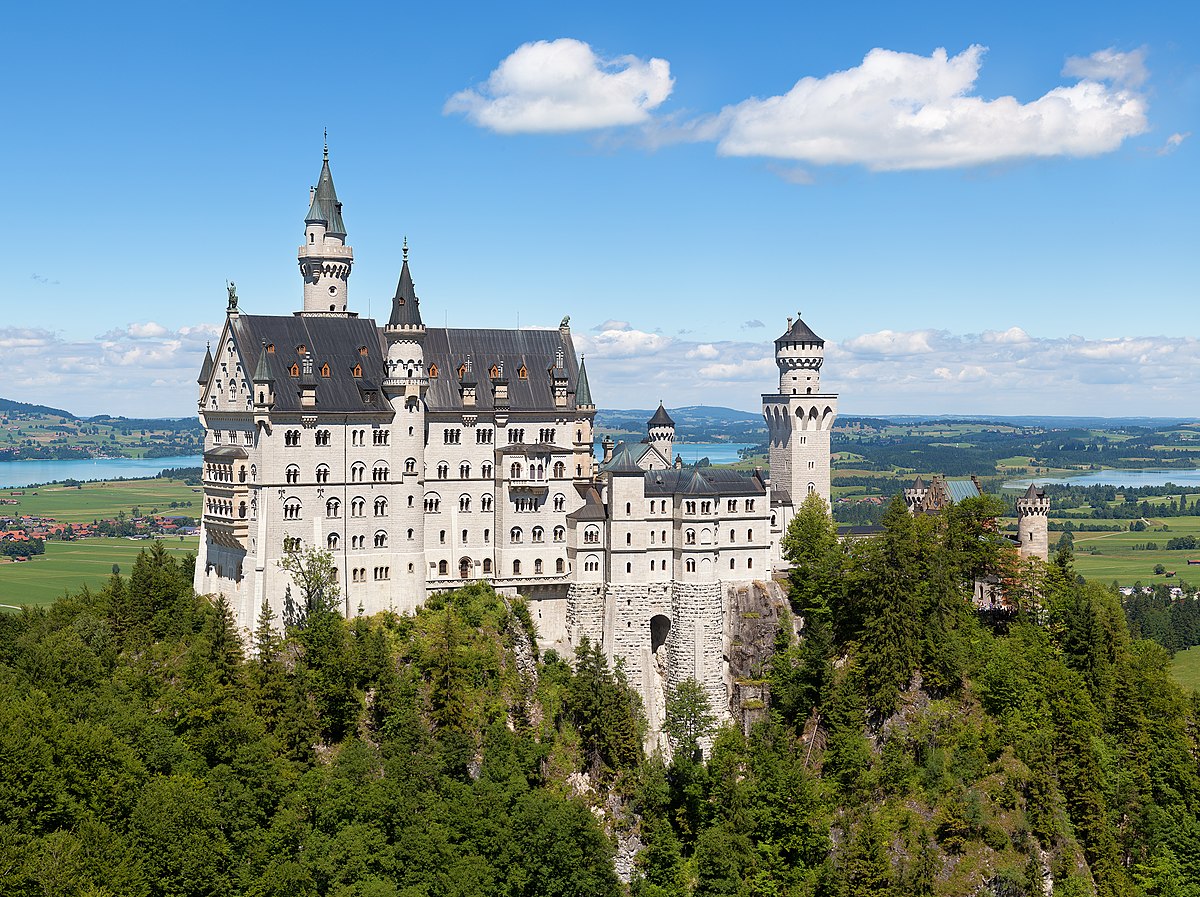
Neuschwanstein Castle
Overview
Neuschwanstein Castle, an iconic palace in Bavaria, Germany, stands as a symbol of romantic architecture and a testament to King Ludwig II’s artistic vision. With its dramatic setting against the backdrop of the Bavarian Alps, this fairy-tale castle attracts millions of visitors each year, eager to explore its enchanting spires and lavish interiors. Built in the 19th century, Neuschwanstein is not only a masterpiece of design but also a cultural landmark that captures the imagination of those who encounter it. The castle is not just a site of historical importance, but also a reflection of the Bavarian landscape, bringing together nature and man-made beauty in a harmonious blend.
As one approaches the castle, its towering presence becomes even more striking, promising an experience steeped in both artistry and history. This guide will navigate through the rich layers of Neuschwanstein Castle, offering insights into its significance, architectural features, and practical information for visitors seeking to immerse themselves in this extraordinary site.
History and Significance
The construction of Neuschwanstein Castle was initiated by King Ludwig II of Bavaria, often referred to as the “Swan King.” This endeavor was driven by a combination of personal aspirations and a desire to create a monument to the ideals of medieval chivalry. Ludwig’s vision for the castle was deeply influenced by the operas of Richard Wagner, whose works celebrated themes of heroism and romance. Though Ludwig II’s reign was marked by political turmoil, his artistic endeavors were largely unimpeded, allowing him to pursue his passion for grand architectural projects.
Neuschwanstein was never fully completed during Ludwig’s lifetime, as he died under mysterious circumstances shortly before its anticipated completion. Following his death, the castle was opened to the public, quickly becoming a popular tourist destination. Its unique design and picturesque location have inspired countless artists and writers, cementing its status as a cultural icon.
The castle’s significance extends beyond its architectural beauty; it symbolizes the Romantic movement in 19th-century Europe, reflecting a yearning for the past and a celebration of nature’s beauty. Today, it serves not only as a historical site but also as a representation of Bavarian culture and heritage, drawing visitors from around the globe who are eager to experience its grandeur and learn about its storied past.
Architecture and Features
Neuschwanstein Castle is renowned for its distinctive architecture, characterized by a blend of Romanesque, Gothic, and Renaissance styles. The design features towering spires, ornate details, and intricate carvings, all of which contribute to its fairy-tale appearance. The castle is set on a rugged hilltop, providing a commanding view of the surrounding landscape, which adds to its dramatic effect.
The façade of Neuschwanstein is marked by its striking white stone, contrasted with vibrant blue skies and lush green forests. As one enters the castle, visitors are greeted by a series of lavishly decorated rooms, each reflecting Ludwig II’s artistic sensibilities. The throne room, for instance, is adorned with golden mosaics and elaborate murals, illustrating scenes from German mythology. The bedroom showcases intricate wooden carvings and features a stunning canopy bed, adding to the castle’s romantic allure.
In addition to its architectural splendor, Neuschwanstein is surrounded by well-maintained gardens and walking paths, inviting visitors to explore the natural beauty of Bavaria. The castle’s design and location create a harmonious relationship between the built environment and the landscape, which further enhances its appeal as a heritage site.
Visiting Information
Reaching Neuschwanstein Castle is relatively straightforward, with several transport options available. Visitors can utilize local trains and buses from major cities in Bavaria, making it accessible even for those without a car. Upon arrival, a short walk or a horse-drawn carriage ride leads to the castle entrance.
Check the official website for current information regarding hours and ticket prices, as these can vary throughout the year. Expect to spend around 2 to 3 hours exploring the castle, including a guided tour that provides insights into its history and architecture.
The best times to visit Neuschwanstein are during the spring and autumn months when the weather is pleasant, and the surrounding landscapes are particularly stunning. Summer months can be busy with tourists, so planning ahead is advisable.
Nearby Attractions
Visitors to Neuschwanstein Castle have the opportunity to explore several nearby attractions that enrich the experience of the region.
Hohenschwangau Castle: Located just a short distance from Neuschwanstein, this castle was the childhood home of King Ludwig II and offers insight into his early life and influences.
Marienbrücke: This bridge provides a stunning vantage point for photographs of Neuschwanstein Castle and the surrounding landscape, making it a must-visit for photography enthusiasts.
Füssen: A charming town nearby, Füssen features historical buildings and offers access to various hiking trails and outdoor activities, perfect for those looking to explore the natural beauty of Bavaria.
Forggensee Lake: This picturesque lake is ideal for leisurely walks, boating, and enjoying the scenic backdrop of the Alps.
Linderhof Palace: Another of Ludwig II’s creations, Linderhof is a smaller yet equally impressive palace featuring beautiful gardens and ornate interiors.
Insider Tips
For the best photography opportunities, consider visiting early in the morning or late in the afternoon when the lighting is softer. The Marienbrücke offers breathtaking views of the castle, especially during sunrise or sunset.
To avoid crowds, consider visiting on weekdays and during the shoulder seasons of spring or autumn. Guided tours can be busy, so aim for less popular time slots to enhance your experience.
Practical Information
When visiting Neuschwanstein Castle, it’s advisable to wear comfortable shoes, as the paths can be steep and uneven. Carrying water and snacks is also recommended, especially during warmer months when hydration is essential.
Seasonal considerations should be taken into account; winter visits may present snowfall, impacting accessibility and views. Check the official website for current information regarding any seasonal closures or special events that may affect your visit.
Frequently Asked Questions
How long should I spend visiting?
Plan for approximately 2 to 3 hours to fully explore the castle and its surroundings.
Is photography allowed?
Yes, photography is allowed in certain areas, but be mindful of restrictions in specific rooms during guided tours.
Are there guided tours?
Yes, guided tours are available and provide valuable insights into the castle’s history and architecture.
What’s the best time to visit?
The ideal times to visit are during spring and autumn for pleasant weather and fewer crowds.
Is it wheelchair accessible?
Check the official website for specific accessibility information, as some areas may present challenges.
Can I buy tickets online?
Yes, tickets can typically be purchased online; check the official website for the most current options.
Are there restrooms and cafes?
Yes, facilities are available, but it’s advisable to check the official website for specifics.
What should I wear?
Dress comfortably according to the season, with appropriate footwear for walking and exploring the castle grounds.
Location
More in Bavaria

8. November 1939 (Denkmal)
📍 Bavaria, Germany
The 8. November 1939 (Denkmal) stands as a poignant monument in Munich, Germany, marking a significant moment in the nation’s history. Dedicated to …

Abbey of St. Nikola in Passau
📍 Bavaria, Germany
The Abbey of St. Nikola in Passau stands as a significant religious and cultural landmark in this historic German city. Located at coordinates …

Abensbergerdenkmal
📍 Bavaria, Germany
The Abensbergerdenkmal, a notable monument located in Freising, Upper Bavaria, Germany, serves as an evocative reminder of the region’s historical and …
Abrechen (München)
📍 Bavaria, Germany
Abrechen in München is a bridge that plays a significant role in the connectivity of this bustling German city. Located at coordinates 48.1357, …
Abschnittsbefestigung Andechs
📍 Bavaria, Germany
The Abschnittsbefestigung Andechs, a striking castle located in the scenic region of Andechs, Germany, offers a fascinating glimpse into the …
Abschnittsbefestigung im Taitinger Holz
📍 Bavaria, Germany
The Abschnittsbefestigung im Taitinger Holz represents an intriguing chapter in Germany’s medieval architectural narrative. Located in Bavaria, this …
More Palaces

Adelspalast
📍 Bavaria, Germany
The Adelspalast, a stunning cultural heritage monument located in the heart of Bamberg, Bavaria, offers visitors an opportunity to explore a …

Aegidienstraße 22
📍 Lower Saxony, Germany
Aegidienstraße 22 is a distinguished palace located in Lübeck’s Old City, a UNESCO World Heritage site known for its well-preserved medieval …

Alexanderpalais (Darmstadt)
📍 Hesse, Germany
The Alexanderpalais in Darmstadt, Germany, is a noteworthy example of architectural elegance and historical significance. This palace, located in the …
Altenburgsches Palais
📍 Lower Saxony, Germany
Altenburgsches Palais, a significant yet non-preserved palace located in the heart of Hanover, Germany, invites visitors to explore its intriguing …

Altenstein Palace
📍 Thuringia, Germany
Altenstein Palace, a striking architectural gem, gracefully ascends a rocky hill on the southwestern slope of the Thuringian Forest in Germany. This …

Älterer Dalberger Hof
📍 Hesse, Germany
The Älterer Dalberger Hof, a distinguished palace located in the heart of Mainz, Germany, offers visitors an intriguing glimpse into the architectural …