Overview
Castra Regina, an archaeological site of profound historical importance, reveals the remnants of a Roman legionary fortress at the location of modern Regensburg, Germany. This site is both a testament to the might of the Roman Empire and a captivating glimpse into the military architecture of ancient times. As you explore the site, you can envision the bustling life that once filled the fortress walls, where soldiers trained and strategized, laying the groundwork for what would become a significant urban center.
Situated in the heart of Bavaria, Regensburg lies at a crossroads of historical trade routes, adding to the site’s significance. The landscape around Castra Regina is characterized by its historically rich urban setting, offering a unique juxtaposition of ancient remnants against contemporary life. Visitors to this remarkable site will discover not only the physical remnants of Roman engineering but also the stories of the people who inhabited this space.
As you wander through the ruins, you will gain insight into the military tactics, societal structure, and daily life of Roman soldiers stationed here. Castra Regina invites you to delve into a world where history and archaeology intersect, revealing the foundations of a city that continues to thrive today.
History and Significance
Castra Regina, established as a Roman legionary fortress, played a pivotal role in the Roman Empire’s expansion into this region of Germany. Over centuries, it became a strategic military outpost, overseeing critical trade routes and asserting Roman control in the area. This site exemplifies the Roman approach to military architecture, integrating functionality with design to accommodate the needs of a legion stationed away from its homeland.
The fortress’s construction marks an important period in the Roman Empire’s history, showcasing their military prowess and architectural ingenuity. It served not only as a defensive structure but also as a center for administration and logistics, making it essential for the empire’s operations in the northern territories. As the centuries progressed, the site transformed, influenced by the cultural and political shifts in the region, yet its foundational significance remained intact.
The cultural implications of Castra Regina extend beyond its military function. The fortress facilitated the spread of Roman culture, law, and governance in the surrounding areas, contributing to the blend of Roman and local traditions that would shape the future of the region. Today, the archaeological remains serve as a vital link to understanding the complexities of Roman life and its enduring impact on European history.
Architecture and Features
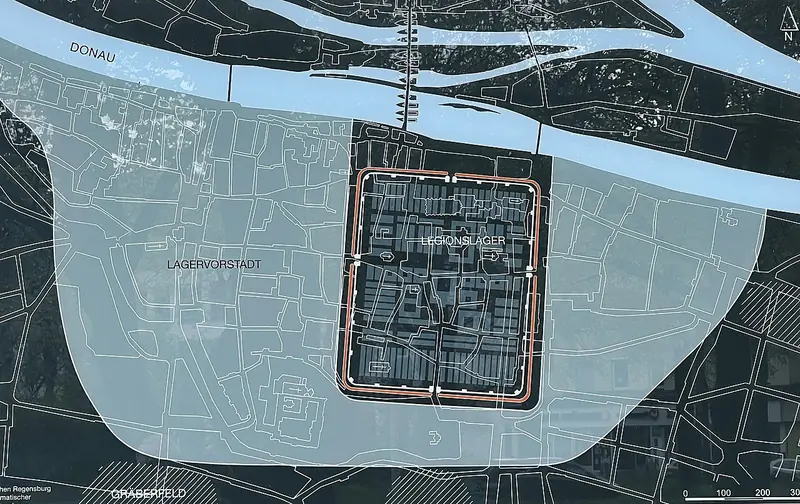
Visitors to Castra Regina will encounter the remnants of a well-planned Roman military fortification. The architecture reflects the strategic military design that characterized Roman fortresses, featuring a rectangular layout with fortified walls. Although specific architectural details are not provided in the data, one can observe the remnants of defensive structures that would have offered protection against invasions.
As you explore the site, look for the foundations of barracks where soldiers lived, training grounds, and storage facilities that highlight the self-sufficiency of the fortress. The layout of the fortress is indicative of Roman military engineering, designed to optimize security and functionality. The site also provides a unique opportunity to appreciate the scale of Roman constructions, showcasing how these formidable structures were built to withstand the test of time.
The archaeological remnants at Castra Regina not only represent military architecture but also hint at the daily lives of the soldiers who inhabited the fortress. As you walk through the site, consider how these structures supported both the strategic military objectives and the community life within the fortress walls.
Visiting Information
Getting to Castra Regina is straightforward, as it is located in the heart of Regensburg, Germany. The site is accessible via various transportation options, including public transit and roadways. Visitors can easily reach the site by walking from nearby hotels or attractions in the city center.
Hours: Check the official website for current opening hours.
Prices: Visit the official website for current admission prices.
Your visit to Castra Regina promises an engaging experience, allowing you to immerse yourself in the rich history of this ancient fortress. Expect to spend approximately 1-2 hours exploring the site, which provides ample opportunity to appreciate the archaeological remains and to reflect on the lives of those who once resided here.
For the best experience, consider visiting in the morning when crowds are typically smaller, or during the spring and fall when the weather is more pleasant. Accessibility details are not specified in the data, so it is advisable to contact the site directly for the latest information regarding mobility access.
Nearby Attractions
While visiting Castra Regina, consider exploring these nearby attractions that enrich your understanding of the region’s history:
Regensburg Cathedral: A stunning example of Gothic architecture, this cathedral features intricate details and beautiful stained glass. It is a short walk from the archaeological site and offers a glimpse into the religious heritage of the area.
Stone Bridge: This medieval bridge, constructed in the 12th century, spans the Danube River and is an engineering marvel of its time. The bridge connects to the old town of Regensburg, providing scenic views and historical context.
Old Town Regensburg: A UNESCO World Heritage site, the old town is filled with charming cobblestone streets, historic buildings, and vibrant squares. Exploring this area offers a comprehensive view of the city’s evolution through the ages.
Walhalla Memorial: Located slightly outside the city, this neoclassical hall honors notable figures in German history. The impressive structure overlooks the Danube and serves as a symbolic tribute to Germany’s cultural heritage.
Museum of Bavarian History: Situated nearby, this museum explores the cultural and political history of Bavaria. It offers exhibits that complement the understanding of the region’s past, including its connections to the Roman Empire.
Insider Tips
For the best photography opportunities, visit Castra Regina during the golden hours of sunrise or sunset. The soft light enhances the textures of the ancient stones and creates a beautiful backdrop.
Take a moment to search for lesser-known details, such as inscriptions or unique stone carvings, that may provide insight into the daily lives of the soldiers who once inhabited this fortress.
To avoid crowds, aim for weekday visits or early mornings. These times offer a more serene experience, allowing you to connect with the history without the distraction of larger groups.
Lastly, engage with local guides if available; their insights can uncover fascinating stories and details that enrich your visit.
Practical Information
When preparing for your visit to Castra Regina, consider bringing comfortable walking shoes, as the site may involve uneven terrain. A camera is essential for capturing the archaeological features and surrounding views.
Seasonal considerations are important; the site can be more enjoyable during spring and fall when temperatures are moderate. Be sure to check the weather forecast ahead of your visit to dress appropriately for the day.
For a smooth experience, it’s wise to contact the site directly for the latest information on accessibility and visitor services.
Frequently Asked Questions
How long should I spend visiting?
You should plan to spend approximately 1-2 hours at Castra Regina. This allows enough time to explore the archaeological site and absorb its historical significance.
Is photography allowed inside?
Yes, photography is typically allowed at the site. However, be mindful of any specific guidelines or restrictions that may be in place.
Are there guided tours available?
Guided tours may be offered, but it is advisable to check the official website or contact the site directly for the most current information regarding tour availability.
What’s the best time of day to visit?
Visiting in the morning is recommended for fewer crowds and a more peaceful experience as you explore the ruins.
Is the site wheelchair accessible?
Accessibility details are not specified in the data. It is best to contact the site directly for information regarding mobility access.
Can I buy tickets online?
Ticket purchasing options may vary. It’s best to visit the official website for the latest information on ticket availability and options.
Are there facilities like restrooms and cafes?
Information on facilities is not provided in the data. Contact the site directly to inquire about available amenities for visitors.
What should I wear when visiting?
Comfortable clothing and shoes are recommended, especially since the site may involve walking on uneven surfaces. Dress according to the weather conditions for a pleasant visit.