Overview
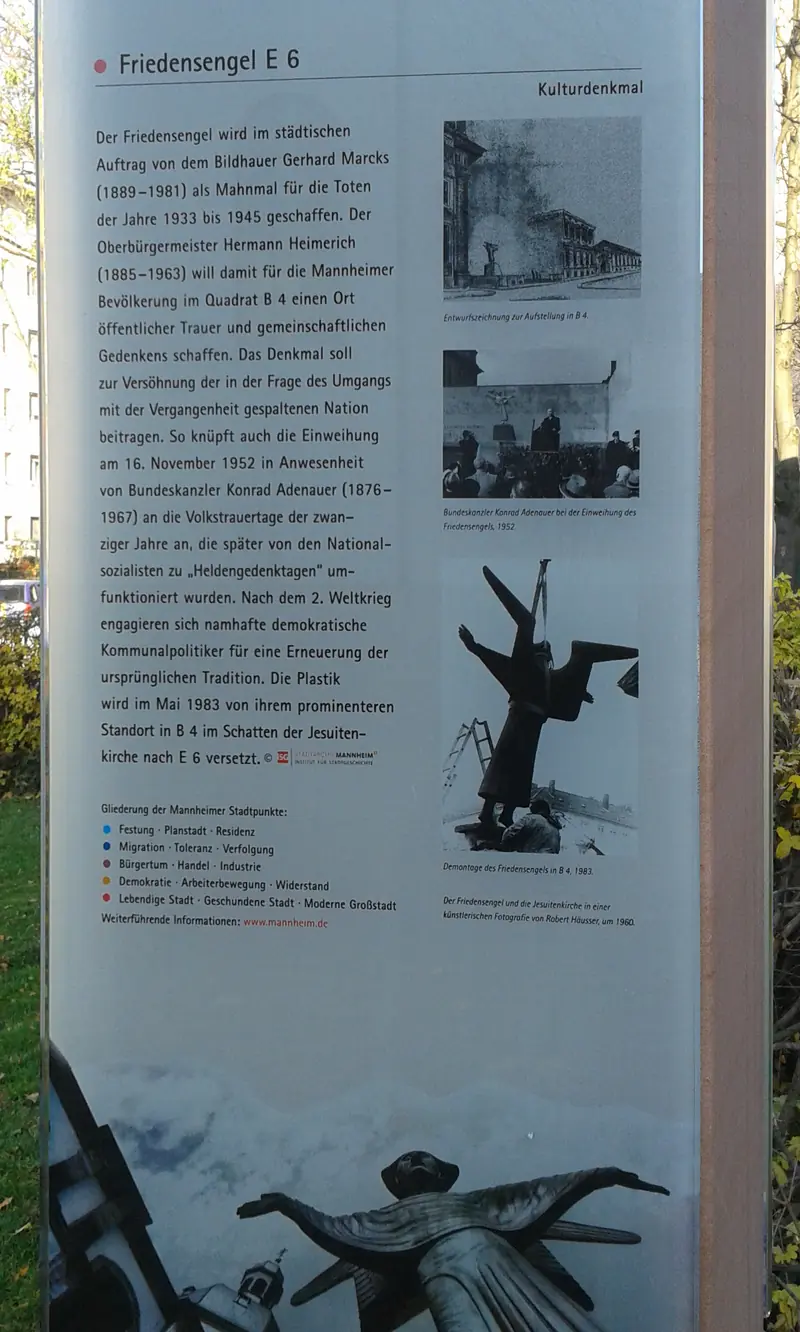
The Angel of Peace in Mannheim stands as a poignant monument dedicated to the victims of Nazi Germany and the Second World War. Erected between 1951 and 1952, this memorial is not only a tribute to those who suffered but also a powerful reminder of the fragility of peace and the importance of remembrance in society. Located in the heart of Mannheim, this site attracts visitors with its significant historical context and artistic merit, inviting reflection on the past and the values of tolerance and peace in the modern world.
Mannheim, situated at the confluence of the Rhine and Neckar rivers, is known for its unique urban layout and vibrant cultural scene. The city, with its rich history and diverse architecture, provides a fitting backdrop for the Angel of Peace, a work by the renowned German sculptor Gerhard Marcks. As visitors approach the monument, they are greeted by its striking presence, urging them to pause and reflect on history’s lessons while considering the importance of peace in our contemporary lives.
The Angel of Peace is not just a memorial; it embodies the collective hope for a future free from war and oppression. The monument serves as a gathering place for commemorative events and ceremonies, reinforcing its significance as a site of remembrance and reflection.
History and Significance
The Angel of Peace holds profound cultural importance in Germany, particularly in the context of the aftermath of World War II. As a memorial for the victims of Nazi Germany, it serves as a solemn reminder of the atrocities committed during this dark chapter in history. The decision to create a monument that honors those who suffered is indicative of a broader movement in post-war Germany to confront the past and promote values of peace and reconciliation.
Constructed in the early 1950s, the memorial reflects a period of rebuilding and reflection in Germany. Artists and architects of the time sought to create works that would not only commemorate the past but also inspire a commitment to preventing such horrors in the future. Gerhard Marcks, the sculptor behind the Angel of Peace, was known for his ability to convey deep emotional narratives through his art. The monument encapsulates the collective grief of a nation while also offering a message of hope and renewal.
The choice of an angel as the central figure in the memorial is significant. Angels are often associated with protection, peace, and guidance, making it a fitting symbol for a monument dedicated to those who lost their lives. The figure embodies the aspirations for a peaceful future and serves as a guardian over the memories of the deceased.
The Angel of Peace has become a site for various commemorative events, reinforcing its role in the cultural landscape of Mannheim. It draws not only locals but also visitors from afar who come to pay their respects and engage with the historical narrative it represents. The monument encourages dialogue about the importance of peace, tolerance, and remembrance in contemporary society.
Architecture and Features
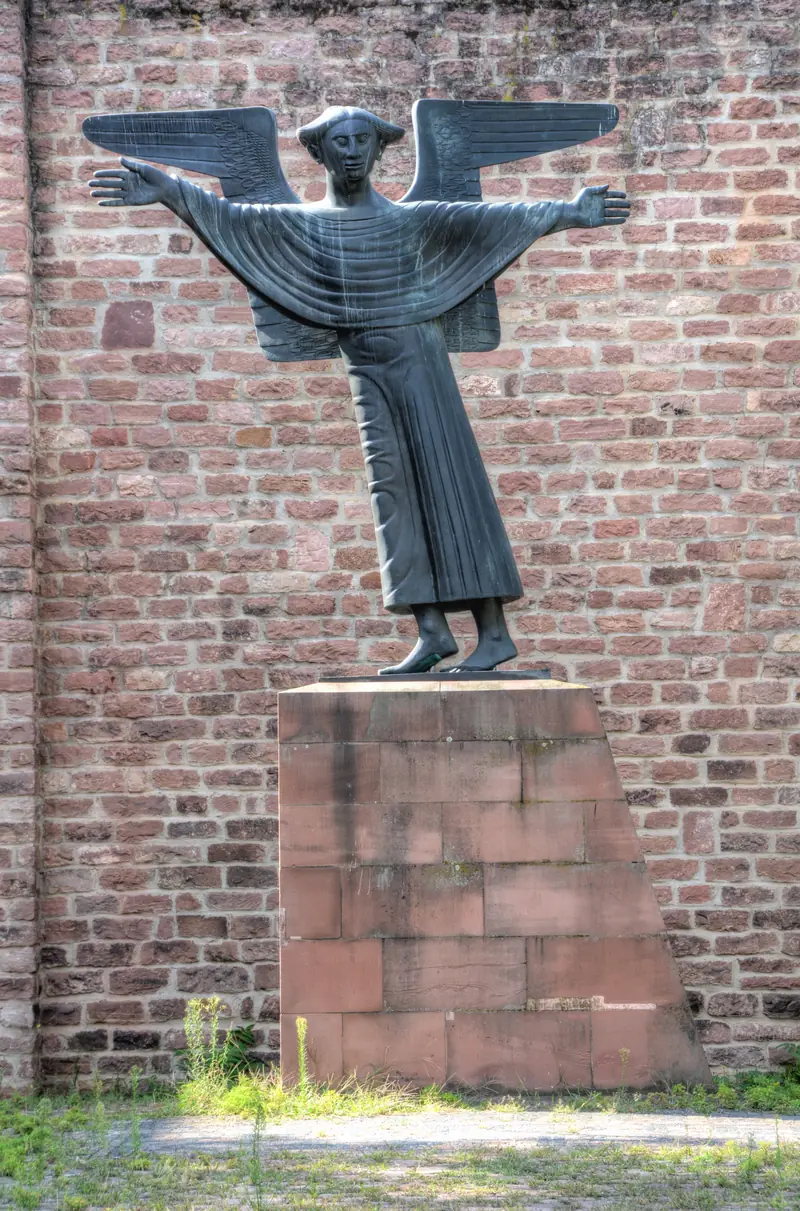
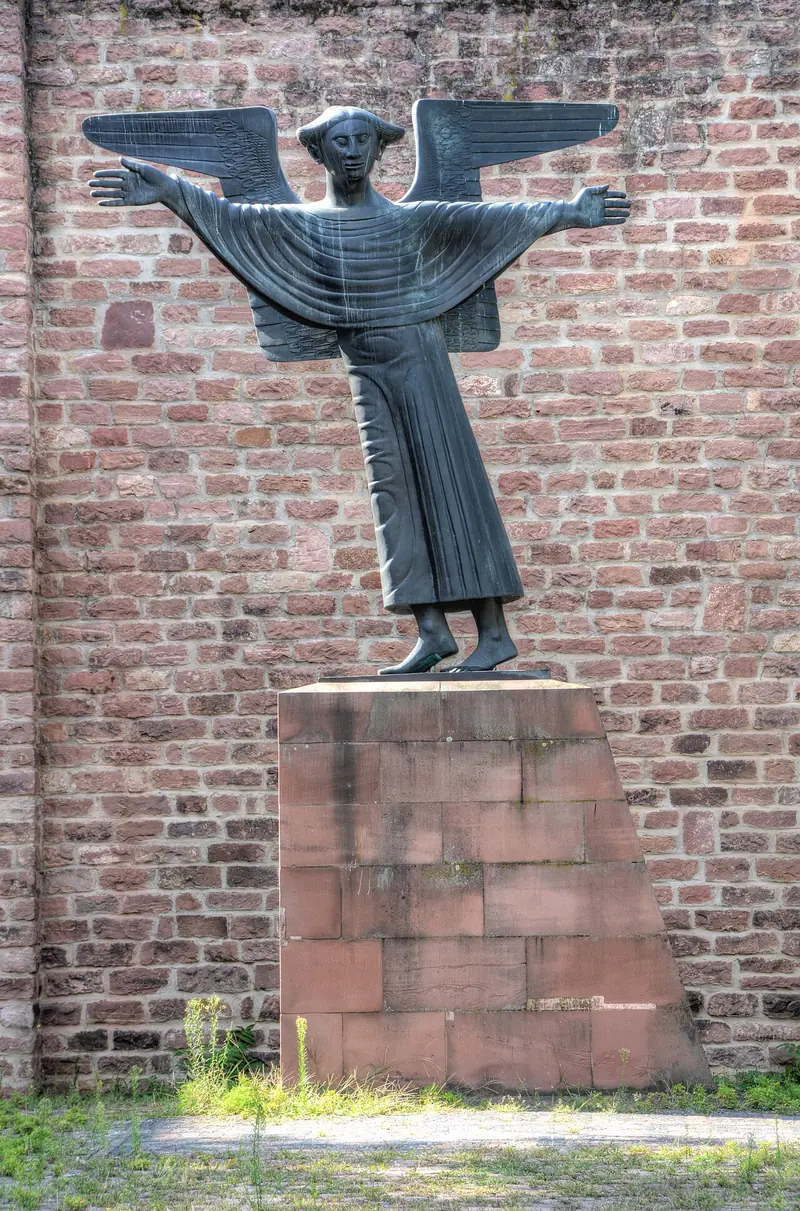
The Angel of Peace is marked by its striking bronze sculpture crafted by Gerhard Marcks. The figure of the angel is gracefully rendered, capturing a sense of movement and serenity. The monument’s design emphasizes both artistic expression and a profound message, effectively merging aesthetics with meaning.
The angel is depicted with outstretched wings, symbolizing protection and hope, while the facial expression conveys a sense of compassion and solemnity. This duality is essential, as it reflects both the sorrow of those who suffered and the aspiration for a peaceful future. The monument’s bronze material gives it a timeless quality, allowing it to endure through the years while weathering the elements.
Surrounding the sculpture, the memorial is often enhanced by carefully maintained landscaping that encourages contemplation. The site is designed to provide a serene environment for visitors, with spaces for quiet reflection and remembrance. The overall composition of the memorial invites individuals to engage with the space, creating an intimate atmosphere for personal reflection.
The Angel of Peace not only stands as a work of art but also serves as a focal point for community gatherings and commemorations, linking the past with present and future aspirations for peace. Its design and artistry are integral to its significance, making it a vital part of Mannheim’s cultural heritage.
Visiting Information
When planning a visit to the Angel of Peace, it is advisable to consider the various transport options available. Mannheim is well-connected by public transportation, including trains and buses, making it accessible for visitors from nearby cities. The site is located centrally, allowing for easy integration into a broader exploration of Mannheim’s attractions.
Check the official website for current information regarding opening hours and any potential entry fees, as these can vary. Visitors can expect to spend a significant amount of time at the memorial, allowing for both exploration of the site and quiet reflection. A visit typically takes around an hour, but those wishing to engage more deeply with the historical context may find themselves lingering longer.
The best times to visit are often during the spring and autumn months when the weather is mild, and the surrounding gardens are in full bloom. Early mornings or late afternoons can also be ideal for avoiding larger crowds, providing a more intimate experience at the memorial.
Nearby Attractions
While visiting the Angel of Peace, several other notable attractions in Mannheim are worth exploring:
Mannheim Palace: This impressive baroque palace is one of the largest in Germany and offers insight into the city’s royal past. The palace gardens are also a lovely spot for a leisurely stroll.
Luisenpark: A large urban park featuring beautiful landscapes, lakes, and a variety of plant species. It’s an ideal location for relaxation and outdoor activities.
Kunsthalle Mannheim: An art museum showcasing a wide range of works from the 19th century to contemporary art, making it a great complement to a visit to the Angel of Peace.
Technoseum: This technology museum offers fascinating exhibits on the history of technology and industrialization in Germany, providing a different perspective on the nation’s development.
National Theatre Mannheim: A cultural hub for performing arts, the theatre offers a diverse program of operas, plays, and concerts throughout the year.
Insider Tips
For those looking to capture the essence of the Angel of Peace through photography, consider visiting during the golden hour—shortly after sunrise or before sunset—when natural light casts a warm glow on the sculpture. This time of day can enhance the emotional resonance of the monument in your photographs.
To avoid crowds, try visiting on weekdays rather than weekends, as this tends to be a quieter time at the site. Additionally, if you plan to attend any commemorative events, arriving early can provide you with the best vantage points to experience the ceremonies fully.
Practical Information
When visiting the Angel of Peace, it’s recommended to bring a camera for capturing the monument and its surroundings. Comfortable walking shoes are advisable, particularly if you plan to explore the nearby attractions.
Seasonal considerations may affect your experience; spring and summer months typically offer pleasant weather, while winter may present colder temperatures. Be sure to check the official website for any seasonal events or changes in visiting hours, as these details can enhance your visit.
Frequently Asked Questions
How long should I spend visiting?
A visit to the Angel of Peace typically takes about one hour, but you may wish to spend additional time exploring the surrounding area and nearby attractions.
Is photography allowed?
Yes, photography is permitted at the Angel of Peace, allowing visitors to capture its artistic beauty and the surrounding landscape.
Are there guided tours?
While specific guided tours may not be available directly at the memorial, local tour operators often include it in broader city tours, providing context and historical insights.
What’s the best time to visit?
Visiting in the spring or autumn when the weather is mild is ideal. Early mornings or late afternoons are also recommended for fewer crowds.
Is it wheelchair accessible?
The site is generally accessible for individuals with mobility challenges, but it’s advisable to check specific access routes and any assistance that may be available.
Can I buy tickets online?
Check the official website for current information regarding any potential entry fees or guided tour options that may require advance booking.
Are there restrooms and cafes?
While there may not be specific facilities at the memorial itself, nearby attractions often provide amenities such as restrooms and dining options.
What should I wear?
Comfortable, weather-appropriate clothing and footwear are recommended, especially if you plan to explore nearby attractions or enjoy the surrounding parks.
Photo Gallery