How the Reformation Transformed Germany's Heritage: The Sites Where History Changed
In 1517, a monk nailed 95 theses to a church door and set in motion events that would reshape German heritage forever. The Reformation's impact is visible today in the architecture, art, and cultural identity of Germany's most significant historical sites.
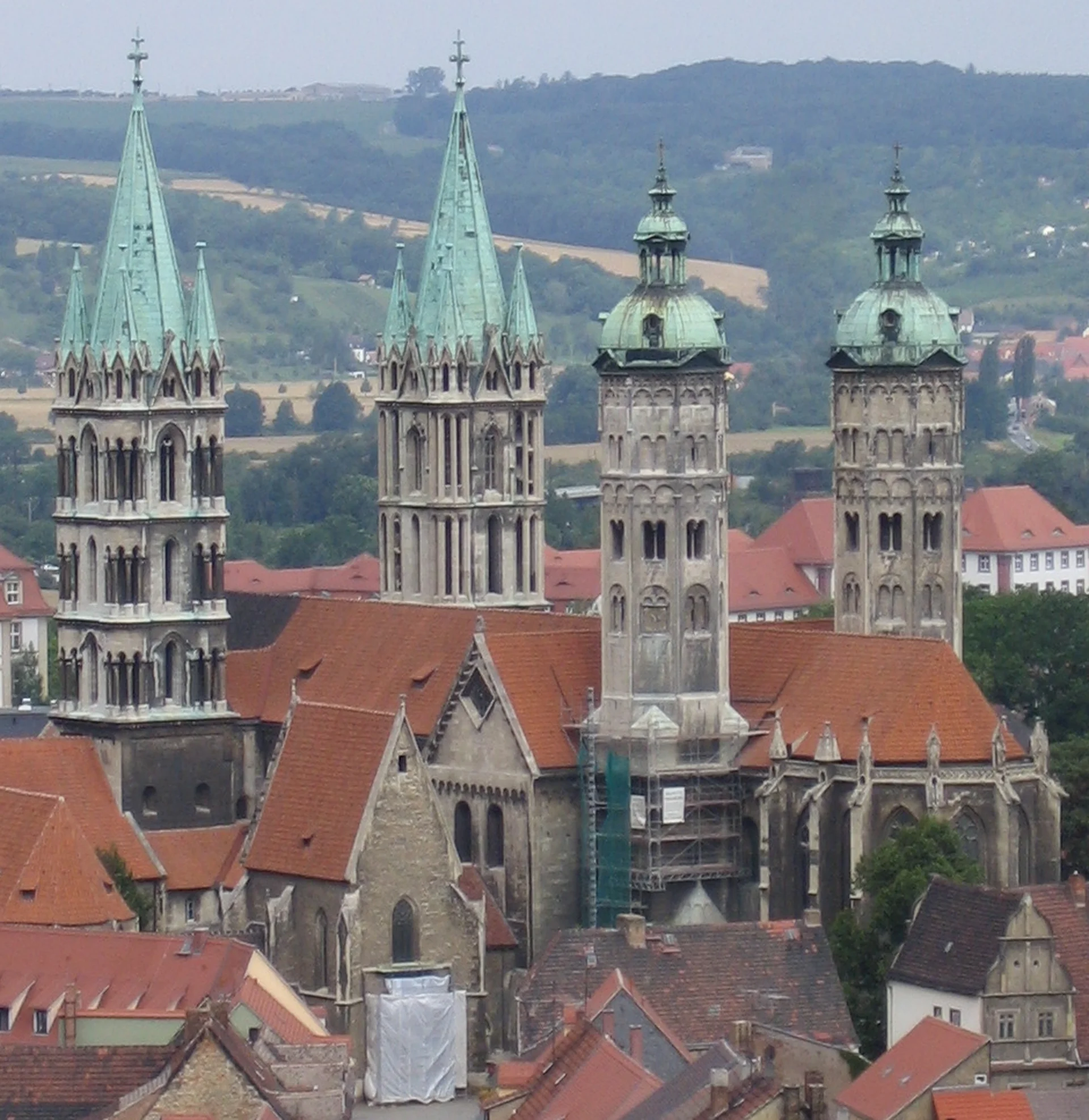
On October 31, 1517, Martin Luther nailed his Ninety-Five Theses to the door of All Saints’ Church in Wittenberg. Or so the story goes. Whether he actually used a hammer or simply posted a notice as was customary for academic disputes, the effect was the same: he ignited a religious revolution that would fundamentally transform not just Christianity, but the political, cultural, and architectural landscape of Germany itself.
As a historian who has spent thirty years studying the Reformation’s impact on German heritage, I find myself continually amazed by how profoundly this period shaped the sites we visit today. The castles, cathedrals, and towns that survived—and those that didn’t—tell the story of a civilization grappling with the most fundamental questions of faith, power, and identity.
This is not merely academic history. Walk through Wartburg Castle and you stand in the room where Luther translated the New Testament, creating the literary foundation of the modern German language. Visit Wittenberg and you trace the footsteps of a movement that split Europe in two. Explore the heritage sites of Bavaria, the Rhineland, and Saxony, and you see architecture frozen at the moment of religious transformation.
Let me take you through the sites where the Reformation happened—and show you how to read the historical evidence written in stone, wood, and stained glass.
The World Before Luther: Late Medieval Religious Architecture
To understand what the Reformation changed, we must first understand what it destroyed—or rather, what it sought to replace.
The Wealth and Power of the Pre-Reformation Church
Late medieval Germany was dominated by the Catholic Church’s architectural and cultural presence. The great cathedrals—Cologne, Ulm, Freiburg—represented not just religious devotion but immense ecclesiastical wealth and political power.
What You See Today:
When you visit Cologne Cathedral, begun in 1248, you’re seeing the apex of High Gothic architecture: soaring vaults designed to lift the spirit toward heaven, stained glass that transformed light into divine radiance, and reliquaries that made the cathedral a pilgrimage destination rivaling Rome itself.
The Shrine of the Three Kings, still housed in Cologne Cathedral, exemplifies pre-Reformation religious culture. This gold reliquary, believed to contain the remains of the Magi who visited the infant Jesus, drew pilgrims from across Europe. The economic and spiritual economy of medieval Christianity revolved around such relics, the indulgences sold to pilgrims, and the elaborate rituals that gave the Church its power.
The Architectural Language of Authority:
Late medieval churches spoke a clear language:
- Height symbolized reaching toward God
- Light through stained glass represented divine presence
- Ornament and gold reflected heavenly glory
- Relics and altars mediated between humanity and the divine
Luther’s critique targeted not just theological abstractions but this entire visible system—the architecture of ecclesiastical authority itself.
1517-1521: The Spark and the Fugitive
Wittenberg: Where It Began
The story starts in Lutherstadt Wittenberg, a relatively minor Saxon town elevated by its university and the ambitions of Frederick the Wise, Elector of Saxony.
What Remains Today:
The bronze doors of Castle Church (Schlosskirche) now display Luther’s Ninety-Five Theses in full. The original wooden doors burned in 1760, but the replacement serves its purpose: marking the site where theological argument became revolutionary act.
Stand before these doors and consider: Luther was not initially seeking to split the Church. His theses were an academic challenge to the sale of indulgences, written in Latin for scholars, not a manifesto for revolution. But in the new age of printing, ideas spread faster than their authors could control. Within weeks, the theses circulated across Germany; within months, across Europe.
The Town Church (Stadtkirche):
Far more significant than Castle Church is Wittenberg’s Town Church (Stadtkirche St. Marien), where Luther preached regularly. This is where Reformation theology moved from theory to practice, where ordinary Germans heard vernacular preaching that made Scripture directly accessible.
The church’s Reformation Altar (1547) by Lucas Cranach the Elder is crucial evidence of how Reformation ideas reshaped religious art. Unlike Catholic altarpieces depicting saints and miracles, this triptych shows biblical scenes with portraits of Reformers including Luther, Melanchthon, and even Cranach himself. The message: these are men witnessing Scripture directly, not intermediaries between humanity and God.
Wartburg Castle: The Outlaw-Translator
In 1521, Luther was declared an outlaw by the Edict of Worms. Any person could kill him legally. Frederick the Wise staged Luther’s “kidnapping” and hid him in Wartburg Castle, perched above Eisenach in the Thuringian hills.
Why Wartburg Matters:
In a small chamber of this medieval fortress, Luther accomplished something that would permanently reshape German culture: he translated the New Testament from Greek into German in just eleven weeks (December 1521-March 1522).
What You Can See:
Luther’s room at Wartburg has been preserved (or rather, carefully reconstructed in historically informed fashion). The wooden desk, the simple bed, the stark furnishings—all emphasize the austere conditions under which this monumental work occurred.
But don’t let the simplicity fool you. Luther’s translation was not just a rendering of words. He forged a literary German that united dialects, established grammatical conventions, and created phrases still used today. He didn’t translate into German—he created German through translation.
The Famous Inkwell Story:
Legend says Luther threw an inkwell at the devil who tempted him in this room. The “stain” was shown to tourists for centuries (and periodically refreshed by enterprising guides). It’s almost certainly apocryphal—but it captures something true about Luther’s combative personality and the sense that theological struggle here had cosmic significance.
My Recommendation:
Visit Wartburg on a quiet weekday. Stand in Luther’s room. The view from the window hasn’t changed much in 500 years: the Thuringian Forest stretching endlessly, a perfect metaphor for exile and isolation. Imagine the intellectual courage required to challenge an institution fifteen centuries old from this remote room.
The Reformation Spreads: How Ideas Changed Buildings
The Problem of Existing Architecture
The Reformation faced a practical problem: Germany was full of Catholic churches—elaborate Gothic structures designed for Catholic ritual. What do you do with them?
Different regions chose different solutions, and the results are visible today.
Solution 1: Iconoclasm and Stripping (The Radical Approach)
In some regions, Reformation fervor led to violent iconoclasm—the destruction of religious images considered idolatrous.
Evidence You Can (Can’t) See:
Many former Catholic churches show signs of deliberate removal:
- Empty niches where statues once stood
- Whitewashed walls covering medieval frescoes
- Plain glass replacing stained glass windows
- Simplified altars replacing elaborate carved retables
Example: Some smaller churches in Thuringia and Saxony were stripped to bare stone, creating the austere Protestant aesthetic we sometimes mistake for original medieval simplicity. It wasn’t—it was ideological remodeling.
Solution 2: Adaptation and Retention (The Pragmatic Approach)
More commonly, Protestant communities kept their Catholic churches but adapted them for Reformed worship.
What Changed:
Focus on the Pulpit: Protestant theology emphasized preaching Scripture, not the sacrifice of the Mass. You can track this architectural shift:
- Catholic churches: Altar as focal point, often distant from congregation
- Protestant churches: Elevated pulpit becomes central, with seating arranged for listening
Visit churches converted to Protestantism in the 16th century and you’ll often see elaborate carved pulpits added after the Reformation, frequently more ornate than the altar.
Example: The Town Church in Rothenburg ob der Tauber became Lutheran in 1544. The church retained its Gothic architecture but added a magnificent Renaissance pulpit and reorganized seating to emphasize preaching.
Removal of “Superstitious” Elements:
- Side altars dedicated to saints (removed or repurposed)
- Reliquaries and pilgrimage shrines (emptied or destroyed)
- Elaborate liturgical vessels (simplified or sold)
Solution 3: New Protestant Architecture (Rare Early Examples)
Truly new Protestant church architecture took time to develop. Most 16th-century Protestants simply adapted existing buildings. But by the late 16th century, a distinctly Protestant aesthetic began emerging.
Characteristics of Protestant Church Design:
- Centralized plans: Congregations gathered around the pulpit
- Gallery seating: Maximize the number who can hear preaching
- Reduced vertical emphasis: Less soaring, more gathering
- Natural light: Clear windows instead of stained glass
- Acoustic considerations: Design for the spoken word
These features would fully develop in 17th-18th century Protestant churches, but their origins lie in Reformation theology’s emphasis on the Word preached and heard.
The Catholic Response: Sites of Counter-Reformation
The Catholic Church didn’t simply accept Protestant success. The Counter-Reformation sought to reclaim territory both theologically and architecturally.
Bavaria: The Counter-Reformation Stronghold
While northern Germany largely turned Protestant, Bavaria remained resolutely Catholic under its dukes and prince-bishops. This division is still visible in German heritage architecture.
The Würzburg Residence:
Würzburg Residence, built 1720-1744, represents Counter-Reformation Catholicism at its most confident and magnificent. This Baroque palace of the Prince-Bishops of Würzburg is a theological statement in architecture:
- Overwhelming beauty: Refuting Protestant austerity
- Integration of church and state: The prince-bishops’ political and religious power united
- Tiepolo’s ceiling fresco: Depicting the four continents acknowledging Catholic authority
- Elaborate court church: Ritual and sacrament celebrated in splendor
The Würzburg Residence says: “This is what Protestantism denied you—beauty, mystery, tradition, authority.”
Contrast with Protestant North:
Travel from Würzburg to Lutheran cities of Saxony and you’ll see architectural denominational boundaries. Catholic Bavaria favored Baroque exuberance; Protestant regions developed simpler, more restrained styles (though this simplification can be overstated—Protestants also loved grandeur, just expressed differently).
Regensburg: A Divided City
Regensburg offers fascinating evidence of religious division. While the city officially became Protestant in 1542, the cathedral (St. Peter’s Dom) remained Catholic under the jurisdiction of the Bishop of Regensburg, creating a Protestant city with a Catholic cathedral—an architectural oddity that persisted for centuries.
What This Teaches Us:
The Reformation wasn’t a clean split. Germany became a patchwork of religious territories determined by the principle cuius regio, eius religio (“whose realm, his religion”—subjects followed their ruler’s faith). Heritage sites reflect this complicated reality.
The Thirty Years’ War: Destruction and Memory
The Catastrophe (1618-1648)
The Reformation’s religious divisions erupted into the Thirty Years’ War, one of the most destructive conflicts in European history. What began as a religious war became a political nightmare that devastated Germany.
The Architectural Toll:
Entire cities were destroyed. Castles burned. Churches ransacked. Population declined by thirty percent in some regions (up to fifty percent in others). German heritage sites bear scars from this period.
Heidelberg: Destroyed by War
Heidelberg Castle’s romantic ruins weren’t created by time—they were created by deliberate destruction. French troops under Louis XIV devastated the Palatinate in the 1680s-1690s, and Heidelberg Castle burned in 1693 (after earlier damage in the Thirty Years’ War).
Why It Wasn’t Rebuilt:
The decision to leave Heidelberg Castle as ruins rather than rebuild reflects both practical considerations (cost) and cultural shifts. By the Romantic era (early 19th century), ruins themselves became valued as picturesque reminders of historical grandeur—a very different attitude from the 16th century’s confidence in rebuilding.
Reading the Ruins:
When you visit Heidelberg Castle today, you’re seeing not just medieval/Renaissance architecture but the physical evidence of religious war. The beautiful Ottheinrich Wing (1556-1566) represents Renaissance humanism and early Protestant princely power; the ruins represent its violent destruction.
Rothenburg ob der Tauber: The Town That Survived
Rothenburg ob der Tauber is Germany’s most complete medieval town—largely because it became economically irrelevant after the Thirty Years’ War and thus escaped later modernization.
The Preservation Paradox:
Rothenburg survived the war itself (barely—a famous legend tells of the Meistertrunk, when the mayor supposedly drank 3.25 liters of wine to save the town). But the war’s devastation left it too poor to rebuild in modern styles. Economic stagnation preserved medieval architecture better than any conscious conservation effort.
What You See:
Walking Rothenburg’s walls and streets, you’re seeing a late-medieval Imperial Free City that was Protestant by 1544. The architectural ensemble—Gothic churches converted to Lutheranism, medieval fortifications, Renaissance townhouses—represents the urban environment of Reformation Germany more completely than larger cities that modernized.
The Reformation’s Architectural Legacy
How to “Read” Reformation Heritage Sites
When you visit German heritage sites, look for these clues to Reformation-era changes:
1. Pulpit Prominence:
- Elaborate pulpit added to medieval church = likely Protestant conversion
- Pulpit positioned centrally = Protestant emphasis on preaching
2. Simplified Altars:
- Original Catholic altars: elaborate, multi-tiered, with many saints
- Protestant simplification: emphasis on Lord’s Supper table, not sacrificial altar
3. Whitewashed Walls:
- Medieval churches were colorful (frescoes, paintings)
- Protestant Reformation often whitewashed these as “idolatrous”
- Some have been restored, showing layers of history
4. Missing Elements:
- Empty niches = removed statues
- Blocked side altars = eliminated saint veneration
- Plain windows = replaced stained glass
5. Added Elements:
- Gallery seating (maximizes hearing of sermons)
- Hymn boards (Protestant congregational singing)
- Elaborate baptismal fonts (Protestant emphasis on baptism)
Sites That Show Multiple Religious Layers
Cologne Cathedral: Cologne Cathedral remained Catholic throughout the Reformation (Cologne resisted Protestant conversion). But construction halted from 1560-1842—the Reformation indirectly created a building freeze that lasted 280 years. The completed cathedral (1880) thus blends medieval and 19th-century work, with the latter consciously completing a Gothic design in an era of historicism.
Ulm Minster: Ulm Minster, by contrast, became Protestant in 1531 while still under construction. The late Gothic design continued, but Protestant Ulm completed the tower in the 19th century, creating the world’s tallest church spire (161.5m) for Protestant worship—reclaiming height symbolism from Catholic tradition.
Why the Reformation Still Matters to Heritage Visitors
It’s Not Just Church History
The Reformation was about power: Who controlled spiritual authority? Who interpreted Scripture? Who held political power? These questions reshaped Germany’s political structure, creating the territorial divisions that influenced German history through unification in 1871 and beyond.
The Religious Geography You See Today:
Northern and eastern Germany: Predominantly Protestant (historically) Bavaria and Rhineland: Predominantly Catholic Mixed regions: Complex local histories
This denominational geography affects which heritage sites were built, preserved, or destroyed. It affects architectural styles. It affects cultural identity.
The German Language and Culture
Luther’s Bible translation didn’t just make Scripture accessible—it created modern German as a literary language. The impact on German culture cannot be overstated.
Sites Connected to This Cultural Revolution:
- Wartburg Castle: Where it happened
- Wittenberg: Luther’s base for Reformation preaching
- Erfurt: Where Luther studied theology
- Eisleben: Luther’s birthplace and death place (both preserved)
The Printing Revolution
The Reformation succeeded partly because it coincided with printing press technology. Ideas spread faster than ever before. This changed everything—politics, culture, education.
Where to See This History:
Several German museums preserve early printed Bibles and Reformation tracts. Gutenberg’s printing press (Mainz, 1450s) made the Reformation possible; Luther’s writings made it unstoppable.
A Reformation Heritage Itinerary
For history enthusiasts wanting to trace the Reformation through heritage sites:
3-Day Reformation Tour:
Day 1: Wittenberg
- Castle Church (Schlosskirche) with Luther’s Theses
- Town Church (Stadtkirche) where Luther preached
- Luther House museum
- Melanchthon House
- Walk the old town where Reformation history happened
Day 2: Wartburg Castle
- Luther’s room and translation chamber
- Castle museum with Reformation exhibits
- Eisenach Bach House (Lutheran music tradition)
- Explore Thuringian Forest setting
Day 3: Erfurt
- Augustinian Monastery where Luther lived as monk
- Cathedral and Severikirche (Catholic continuity)
- Medieval merchants’ bridge
- University (Luther studied here)
Week-Long “Luther’s Germany” Journey:
Add to 3-day tour:
- Heidelberg: Protestant Palatinate and Counter-Reformation destruction
- Würzburg: Catholic Counter-Reformation splendor
- Rothenburg: Imperial Free City that turned Lutheran
- Regensburg: Complex Catholic/Protestant division
- Cologne: Catholic resistance to Reformation
The Reformation in Architecture: A Summary
The Protestant Reformation transformed German heritage in these ways:
1. Repurposed Architecture: Catholic churches adapted for Protestant worship, creating hybrid spaces.
2. Iconoclasm: Deliberate destruction or removal of religious imagery changed the appearance of thousands of buildings.
3. New Architectural Priorities: Protestant emphasis on preaching influenced church design toward acoustics and visibility over mystical height and light.
4. Denominational Styles: Catholic Baroque vs. Protestant simplicity (oversimplified but partially true).
5. War Damage: Religious conflict physically destroyed heritage, while economic collapse preserved some sites through neglect.
6. Modern Conservation: 19th-20th century restoration movements had to decide which layer of history to preserve—medieval Catholic, Reformed Protestant, or Baroque Catholic?
Conclusion: Layers of History in Stone
When I lecture on Reformation architecture, students often want clear answers: Is this building Catholic or Protestant? Medieval or Renaissance? But heritage sites resist such simplicity. They’re palimpsests—layers of history written over each other, each era leaving its mark.
Wartburg Castle was an 11th-century fortress before Luther arrived. It’s a UNESCO World Heritage Site today partly because of Luther, but also because of its medieval Romanesque palace, its 19th-century Romantic restorations, and its role as a symbol of German cultural nationalism.
The Reformation is one layer—crucially important, historically transformative—but not the only layer.
This complexity is what makes German heritage sites endlessly fascinating to historians. Every building tells multiple stories. Every stone records competing visions of faith, power, and identity. The Reformation didn’t end history; it added another chapter to buildings that continued evolving for centuries.
Explore Reformation Heritage
Discover the sites where German history changed forever. Visit Wartburg Castle, Lutherstadt Wittenberg, and other Reformation landmarks, or explore our complete UNESCO World Heritage Sites guide featuring many sites shaped by this era.
More Historical Context:
- Medieval Germany: 30 Historic Sites - The world before the Reformation
- Gothic Architecture in Germany - The churches Luther challenged
- Baroque Architecture in Catholic Bavaria - The Counter-Reformation response
What aspect of Reformation history fascinates you most? Have you visited these sites? I’d love to hear your experiences and questions.
Prof. Dr. Martin Schmidt is a historian specializing in the religious and cultural history of late medieval and early modern Germany. He has published extensively on the Reformation’s impact on German architecture and cultural identity, and leads annual historical tours of Reformation sites. Find more of his historical deep-dives at World Heritage Germany.
Prof. Martin Schmidt
German History Professor
Professor of Medieval History at Heidelberg University with expertise in German castles, cathedrals, and monastic architecture. Martin has published extensively on medieval European heritage and leads academic tours.